Got to have one…or two. I have a light carbon fiber one that I use when I hike or travel. I have a big ass heavy one that I use for long exposure night photography or when I am using my giant 800mm lens. On the light one I have a ball head (that is the part where you attach the camera to the tripod) that is fairly high end…and a closet at home with a half dozen cheaper ones that I bought and wanted to throw off a cliff once I used them. To me, the ball head has to be easy to use in complete darkness…the black of the middle of the night. Most do not meet that standard. I use Really Right Stuff ball heads, but there are others. Don’t go for the cheap ones. On the heavy tripod I use a Wemberly Gimbel Head that is built to easily handle big gear with big lenses.
I do not use mono pods. They can have some limited use…but not much.
I do not use the little travel tripods…too flimsy and move around in the wind.
The biggest complaint that any of us who have led new photographers out into the field at night is this…people who bring out their tripods, loosen them up to extend the legs and then extend the legs until the legs fall off…in the dark…probably losing needed parts as they do so. They always then need help to get them back together…and that is not always easy and is always time consuming. Get a tripod that does not come apart that easily and learn to use it BEFORE you hike out at night. I know professional photo guides who will not even hike you out if you show up with a flimsy tripod.
If you are going to get really good at photography, you need to eventually get to be like the Army guys who can disassemble and assemble their complicated rifles while blindfolded. There is nothing I can not do with my camera that I can not do blind folded…except perhaps, change the settings. Be able to get the camera out, change lenses, get it turned on and operating, get it attached to the tripod, get the tripod extended properly, attach things like your cable remote…all without being able to see any of it in the dark. Also be able to change batteries and memory cards in the dark…which probably means you have them handy and security in your pocket ready for use.
One other thing…the ball head is a really useful tool for helping you set your composition with your camera. Learn how to use it…how to make it turn right to left and back without loosening it from the tripod itself…how to then tighten it so it moves no further…same for moving that head so the camera points up or down…learn how to use it to shoot horizontal shots or vertical shots (you will need to attach an appropriate L bracket to the bottom of your camera so you can attach it for both horizontal and vertical…without the L bracket you will only be able to attach it for horizontal). Be able to do all of the above in the dark with no light on at all.
Which brings me to this…I can not tell you how much I hate it when someone shows up on a night shoot totally unprepared. If that is the deal we all planned…a night mission to sort all that out, that is fine and I am prepared for it. But if you and I are going out for a night shoot…unless you warn me ahead of time…and not in the car on the way to the shoot at 2am…and you then get out there and shine your flash light around for 20 minutes while the rest of us are trying to get our shots…I am not going to be a happy camper. You CAN NOT discretely shine a flash light around when others are doing long exposure night shots…it can not be done. And those red lights that don’t show up in the photos that others are taking because it is red light…well, they do show up in the photos of others and ruin their shots. If you are new to night photography, let that be well known before anyone agrees to take you out…and it will all go fine. Pretend you know what you are doing and you really don’t…and you will end up ruining everyone’s night. And, by the way, we were all new at this at one time…so don’t be bashful about just telling it like it is…almost all of us are happy to help…we just don’t want to be surprised.
One last thing…when photographers shoot together at night, it is a team effort. We coordinate our efforts and do all we can to not get in each others way. That takes communication and some discussion and a genuine interest in everyone having a great experience. When the one guy or gal wanders off out of sight and then starts waving around their laser or bright light…the fun goes out of the shoot…and that happens all the time…don’t be that guy.
Ok…I just read back through this blog and I sound like the old guy who yells at people to get off of his lawn. Sorry about that…but it needs to be said…so I am leaving it as it and will check into the availability of a local anger management class.
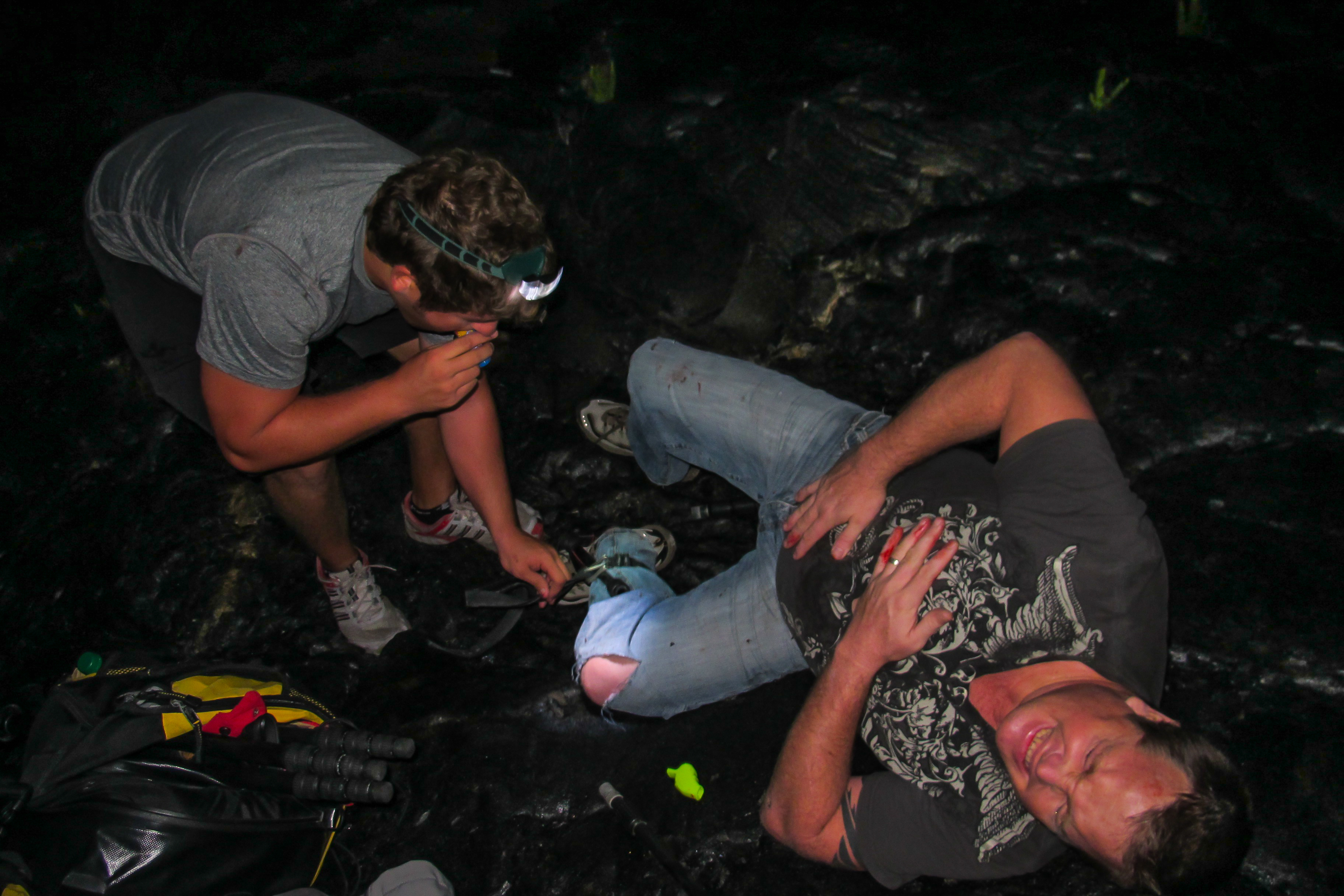
And yet one more after-thought…I use my tripod as a cane or walker when I am on slippery or very uneven surfaces…it has saved me from falling more than once. And, if everything goes wrong and CJ falls into a deep crack in the lava and compound fractures his ankle…as he did back in 2011…Nick and I were able to take an expensive tripod apart and turn it into a much needed splint to stabilize CJs broken ankle as we “Weekend With Bernie” him over about a mile of rough lava to the car. Once we got to the car we were able to access the Medical Kit CJ and Nick kept there for just such on occasion…and found it to contain exactly one aspirin and one Band-Aide. Photo by me of Nick working on the “splint” with CJ seeming to enjoy the action.
Aloha.